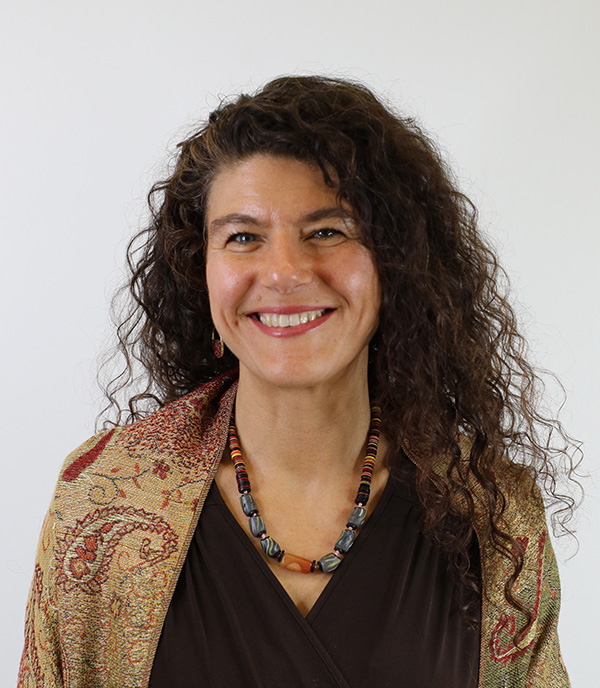
Ph.D., Associate Professor at the University of Illinois at Chicago, and pioneer of critical social network analysis — a method for tracing the relationships that help educators grow, organize, and stay. Author of five books on teacher networks, equity, and humanizing professional development.
Kira began as a kindergarten teacher in Philadelphia and an AmeriCorps educator working in community health and food justice. That ground-level view of how teachers survive — or don't — is still the engine behind her research nearly three decades later. She went on to pioneer critical social network analysis, a methodology that maps the relationships sustaining (or failing) educators, and has spent her career translating that map into programs, books, and policy that actually change outcomes for teachers and the communities they serve.
Her work sits at the intersection of relationships, social technologies, and educational equity. She is equally at home tracing the informal networks that sustain teachers of color in hostile school climates and analyzing how educators use Twitter, social annotation platforms, and other connected technologies to organize, collaborate, and learn across distances.
She currently co-coordinates the Language, Literacies & Culture doctoral program at the University of Illinois at Chicago, where she is a tenured Associate Professor. She previously directed the UIC Center for Literacy, a $6.8M family-literacy organization serving 5,000 Chicago families annually, and held the endowed Rosemary & Walter Blankley Professorship at Arcadia University.
Four ongoing studies exploring the social networks that shape how people read, write, teach, and learn together.
Research on a bilingual family literacy program co-developed through the Center for Literacy, focusing on social connections and collaboration among families in the program.
Collaborators: Dr. Andrea Vaughan & Dr. Sarai Coba-Rodriguez (UIC)
International research collaboration on the experiences of teachers using social media for professional networking and development.
Collaborators: Dr. Paula Marcelo-Martinez & Dr. Carlos Marcelo (Andalusian Interuniversity Institute for Educational Research)
Project site →Studying students' social networking and critical engagement of texts during social annotation practice.
Collaborator: Dr. Rukmini Advanhanem (Discovery Partners Initiative)
Critical social network analysis of student writing support networks in higher education.
Kira partners with universities, school districts, foundations, and nonprofits to design programs and evaluate impact — grounded in two decades of research on what actually helps educators connect, lead, and stay.
Talks and working sessions on teacher networks, connected learning, and humanizing professional development — from 60-minute keynotes to multi-day institutes.
Design-based and social network research methods to evaluate teacher pipelines, family literacy programs, and community education initiatives.
Building professional development and fellowship programs — from summer institutes to certificate programs — rooted in social capital theory.
Mapping the relationships inside a school, district, or organization using UCINET, Gephi, and critical SNA methods to surface where support is — and isn't.
Strategic support for research-backed grant proposals and funder reports, drawing on a track record securing $10M+ in program funding.
Manuscript review and editorial guidance, drawing on experience as Editor-in-Chief of Review of Education, Pedagogy, and Cultural Studies.
Peer-reviewed research is written for other researchers. Here, key studies are translated into short podcast episodes and plain-language takeaways — so the people the research is actually about can use it too.
How small, early relationships — "germinal networks" — help teachers of color become organizers for racial justice, both inside and outside their schools.
A field guide for designing professional development that treats relationships — not just content — as the thing being taught.